Know what to ask
before the guest arrives.
Guest shortlists, source research, interview questions and a brief for the host. We read the guest’s previous work to find specific experiences worth discussing and questions they have not already answered.
Who belongs on the guest shortlist?
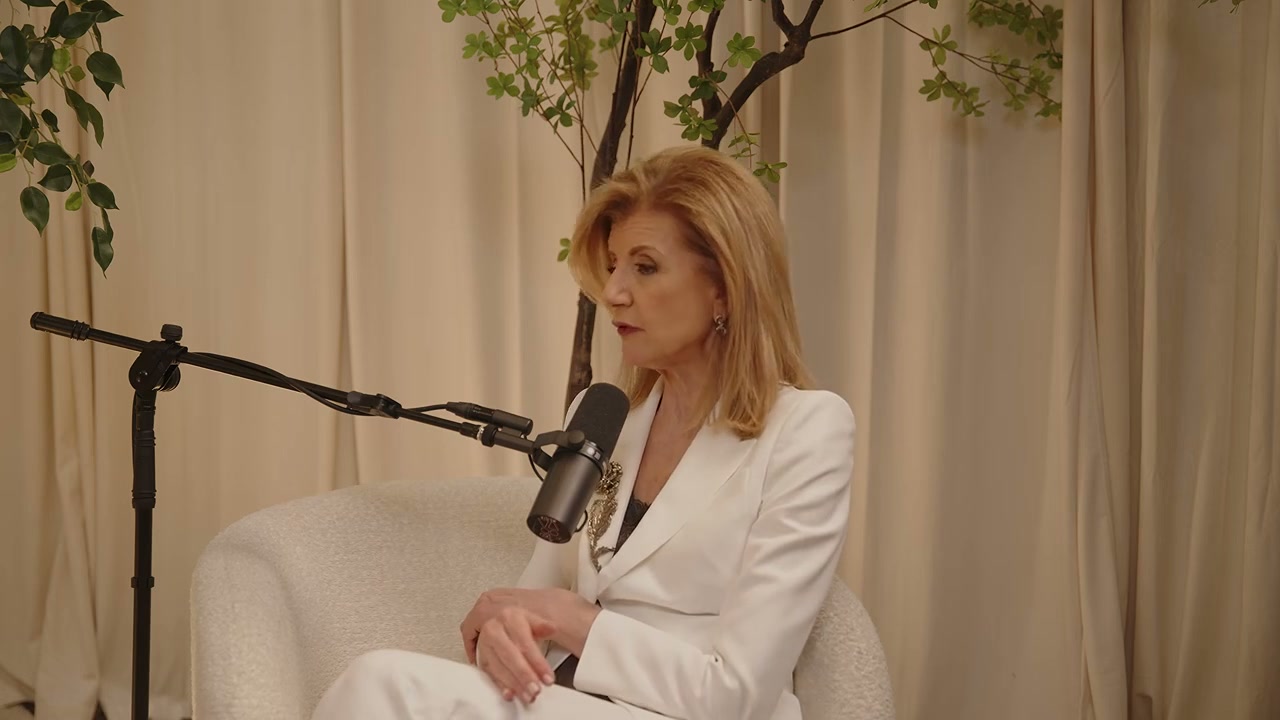
Our New York guest shortlist for The Masoom Minawala Show proposed asking Arianna Huffington what building HuffPost had cost her. She had collapsed at her desk from exhaustion. Our episode brief recommended her for the story she could tell as a founder. For a listener’s question about diagnosing a sleep problem, we’d look for a clinician.
Masoom asked about building HuffPost on four hours of sleep a night. Huffington corrected the timeline. She had slept that little for the first two years. By her account, HuffPost found success after she changed her habits.
When you review a shortlist, ask for the question beside each name. What did this person do, see or decide that gives them a firsthand answer?
Who will fill the recording slot?
You have a studio on hold for Friday and nobody in the guest chair yet. Two researchers offer ten names. Which quote leaves your producer with ten invitations to write?
On November 15, 2026, Gideon D.’s basic Fiverr package covered research on ten potential guests. His FAQ says outreach depends on the package. Lincoln’s starter package included personalised outreach and follow-up for ten prospects. Either way, someone still has to say yes to Friday. Indian Podcast Studio quotes per confirmed guest and includes scheduling and a pre-interview brief.
If your producer handles invitations, ask us to shortlist guests and show what each could answer from experience. If the guest and date are already confirmed, send us the episode premise. We can start with the questions the host takes into the room. For an empty slot, agree who can send the invitation, who confirms the date and when to approach the backup.
Download the one-recording brief. It includes a worked request and a blank version you can send to each producer for a comparable quote.
Find the conversation in the research.
The guest may have told their founding story in ten other interviews. We read those conversations so the host can ask about the decision everyone passed over, follow up on a contradiction or return to a story with a more useful question.
For an ongoing show, guest research sits within its editorial direction. Our work with Masoom connects those decisions to the show’s strategy, questionnaires, trailers, Shorts and packaging.
Build the information behind the questions.
We examine the relevant source material: previous interviews, writing, books, research, recent work and other public accounts. The aim is to know which stories have already been told, where the guest has been specific, and what remains worth asking.
Useful findings become source-linked notes. Direct quotes stay attached to their source. An interpretation remains an interpretation. Where accounts conflict, the host needs a precise, fair question rather than an invented resolution.
A brief built for the host.
| Part | What it does |
|---|---|
| Episode promise | Defines what the audience should understand by the end. |
| Guest context | Summarizes the experience and work relevant to this conversation. |
| Strong material | Collects specific stories, claims, decisions and examples with sources. |
| Unexplored territory | Identifies useful gaps in earlier coverage or new developments. |
| Question arc | Moves from an accessible opening into depth, tension and a satisfying close. |
| Follow-ups | Gives the host ways to ask for a scene, an example, a tradeoff or an explanation. |
| Recording priorities | Separates essential questions from optional routes through the conversation. |
Twelve guests.
One demanding shoot.
For a NYC shoot of The Masoom Minawala Show, the research system covered 12 guests and 1,000+ sources in six hours, producing an 80-page brief per guest. Rishwajeet described the work in his April 2026 essay.
That was the research volume. For the recording, we turn it into a shorter questionnaire with priorities and follow-ups the host can find during the conversation.
A foundation question for Mickey Contractor.
For Mickey Contractor’s episode of The Masoom Minawala Show, the preparation brief asked how a viewer could tell whether she had chosen the wrong foundation shade. It gave the host a practical follow-up to pursue alongside the guest’s Bollywood stories.
When Masoom asked the question on air, Mickey qualified it: he said the problem was less common than it had been 15 years earlier. The released conversation preserves that answer. Follow the brief, the exchange and the later packaging choice in the Masoom case.
Carry the research into the release.
When the scope includes the wider show, the conversation informs the titles and thumbnail directions, trailer and short-form work. After release, audience response helps refine the next guest choice and question arc. That connection is part of our podcast production service.
Questions about the work.
What do you deliver for a podcast guest?
The agreed scope can include an episode promise, source-linked research, guest context, story and angle notes, a question arc, follow-ups and a recording questionnaire.
Can you help choose guests as well as research them?
Yes. We shortlist guests against the show’s audience, past episodes and the question each guest can answer from experience. Once you choose a guest, we prepare the research and interview brief.
Will the host receive an 80-page document every time?
Research depth and the recording brief depend on the episode. The published NYC example used an 80-page brief per guest. We scope the material around what the host and production actually need.
Can you work with our existing podcast production team?
Yes. We can own research and questionnaires while your team records, edits and publishes, or connect the work to a wider production engagement.
Tell us what you want to make.
Tell us about the channel or idea, the team you have and where you need help. We’ll discuss the scope on a 30-minute call.
Book a 30-minute call rishwajeet@machinehouse.media