Know what to make next.
And why it should work.
Work directly with Rishwajeet Singh on the direction of your content. Audience research, positioning, formats, topics, storytelling and packaging—turned into a plan your team can make, measure and improve.
Choose the subjects.
Develop the formats.
- A useful diagnosis
We read the videos alongside their data: topic, format, hook, title and thumbnail, click-through rate, retention, subscriber response and comments. Comparing similar releases helps identify what needs to change in the next idea, script or package.
- Positioning & format
Agree what viewers should come to you for and how that promise works on camera. We develop repeatable formats that fit your expertise, personality and production capacity.
- Topics & episode premises
Build a content slate with a reason behind each choice. Research and performance models help us assess audience fit, specificity, hooks and format before you spend time recording. See the film we folded into Scaler’s weekly show.
- Packaging & editorial reviews
Develop titles and thumbnail directions alongside the idea, then review scripts or question arcs so the episode delivers on the promise. Your team leaves with concrete decisions and usable briefs.
- A plan that changes with evidence
After release, we review the results against the original idea and forecast. The next slate reflects what we learned about the audience, the format and the way you presented it.
Your team makes it.
We work on the direction.
We begin by reviewing your channel and the question you want to resolve. The first plan sets out the audience, formats and proposed subjects, with briefs your writers and producers can work from.
Most ongoing engagements run in quarterly cycles, with weekly strategy, script or episode reviews, and a performance note. We use the quarter’s results to decide what to continue, change or stop.
Rishwajeet leads strategy and reviews. Your team can handle recording, editing and release, or his Breakout team can handle production too. The written proposal sets out who owns each part and what they will deliver.
For a worked example, see how to develop a repeatable series, or find a founder’s point of view.
What would you take
off our slate?
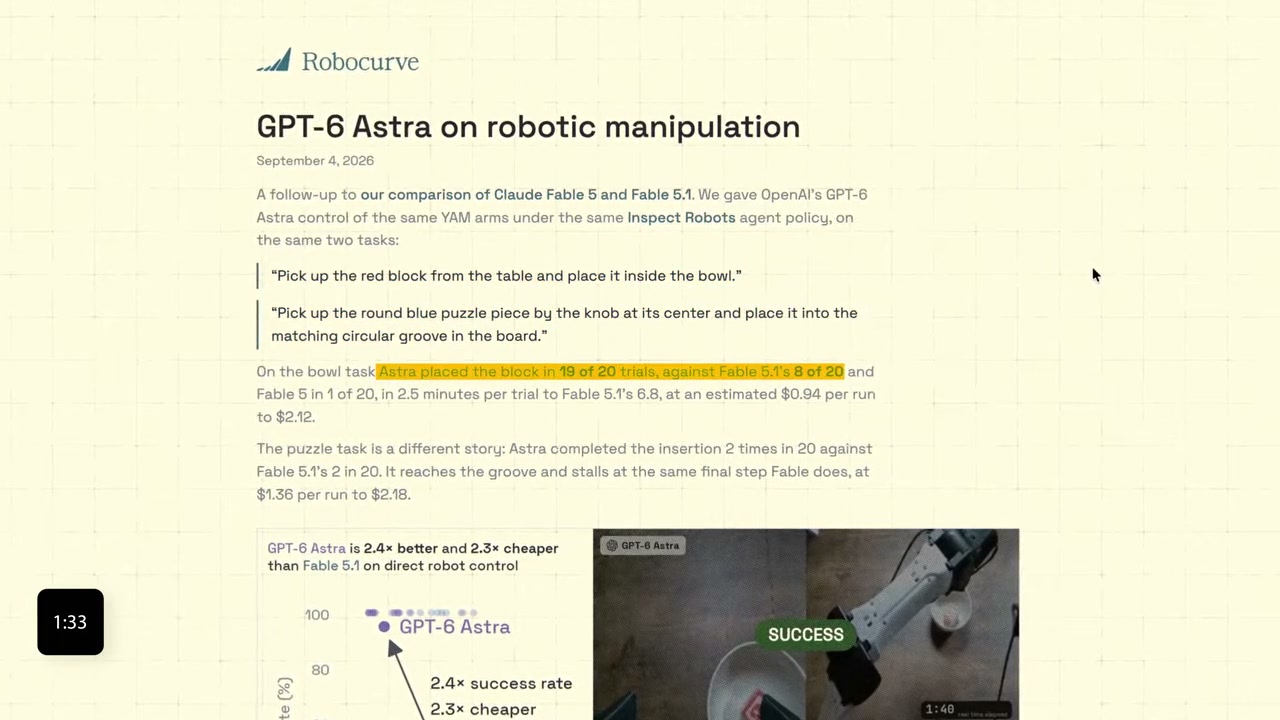
Scaler had an eleven-minute script ready to shoot about GPT-6 Astra. Its weekly AI show had covered the pause in the model’s training. When the model came out, Rishwajeet made it the lead story in the next edition. Viewers who remembered the pause could now see what the model could do. Hear the host pick up the story at 1:44.
The standalone film had called for five demonstrations. The new shoot checklist sent the producer back to the footage already picked, including a robot arm trying to put a red block in a bowl. The editor’s brief paired that shot with Robocurve’s test results so viewers could see how often the arm succeeded.
Before approving a separate shoot, put the two briefs side by side. What would someone learn from the standalone film that your regular show couldn’t give them?
When you need
an editorial partner.
- You have a production team but need editorial direction. We give the team a clear slate, sharper briefs and regular reviews.
- You are publishing consistently but growth has stalled. We examine where audience promise, topic selection and packaging have drifted.
- You are starting a new channel or show. We establish the audience, premise and formats before building the first slate.
- You have several content workstreams. We help connect long-form, short-form and distribution around a coherent editorial direction.
We keep a limited roster of active engagements so there is time to understand the channel, review the work and follow through on the decisions.
How a review
changed the next idea.
Roshan Kotla: find the reason behind the hit. We read 443 comments after the IT essay broke out, then built the next topics around the audience’s concern with education, jobs and getting ahead. The first three essays have passed 975K views together.
Scaler: a software career, explained through a shop ledger. Follow one episode’s premise, title choices and thumbnail direction, then see where the published video delivers its answer. The case also records the dated results of the 17-release slate.
Masoom: give each guest a clear job. A 12-dimension content model supports the decisions behind an entire show, from the guest slate to the next title test.
Public video views as of 7 September 2026. Periods, roles and scope in each case.
Look closer at the work.
We review your videos, audience, titles, thumbnails and production process. You get a written diagnosis, changes to specific videos and a proposed slate to discuss with Rishwajeet.
Explore ↗Titles & thumbnail strategyYouTube packaging connects an idea to the person who might watch it. We develop titles and thumbnail directions around the audience, the story and the promise the video can actually deliver.
Explore ↗Founder & brand contentContent strategy and production for founders, experts and brands with something useful to say. We turn real experience into a point of view, repeatable formats and work an audience has a reason to return to.
Explore ↗Questions about
working together.
What does a YouTube strategist do?
A YouTube strategist helps decide who the channel serves, what it should make, how videos are packaged and how results should change the plan. Our work includes channel diagnosis, positioning, formats, topics, script reviews and performance analysis.
Can we keep our existing editors and production team?
Yes. Rishwajeet can lead strategy and editorial reviews while your team handles recording, editing and publishing. We agree the briefs, reviews and handoffs around your existing operation.
Can you also handle production?
Yes. Rishwajeet co-founded The Breakout Company. His team can cover scripting, production, editing, packaging and channel operations as part of a full-service engagement.
How do prediction models fit into the strategy?
Models help assess ideas using the channel’s available performance data and editorial criteria. They support a strategist’s decision. Published results are compared with the forecast so later choices can improve.
How do we start, and what does it cost?
Start with a 30-minute intro call about your channel, goals and team. We then prepare a written proposal with the scope, working rhythm and investment. Most ongoing strategy engagements run on quarterly retainers.
Tell us what you’re trying to build.
Tell us about the channel or idea, the team you have and where you need help. We’ll discuss the scope on a 30-minute call.
Book a 30-minute call rishwajeet@machinehouse.media